When it comes to teaching computer science and programming in K-12 education, choosing the right platform can significantly impact student engagement, learning outcomes, and teacher workflow. Both JuiceMind and CodeHS stand out as popular options for educators, but understanding their differences is crucial for making an informed decision for your classroom.
Platform Overview
JuiceMind
JuiceMind is a comprehensive coding education platform designed specifically for K-12 computer science education. Built by educators and engineers with classroom experience, JuiceMind focuses on creating an engaging, accessible coding environment with robust assessment capabilities and curriculum alignment.
CodeHS
CodeHS has been a prominent player in the CS education space for over a decade. The platform offers coding environments along with curricular resources covering various programming languages and computer science concepts, emphasizing a blended learning approach.
Key Differentiators
1. User Interface and Student Experience
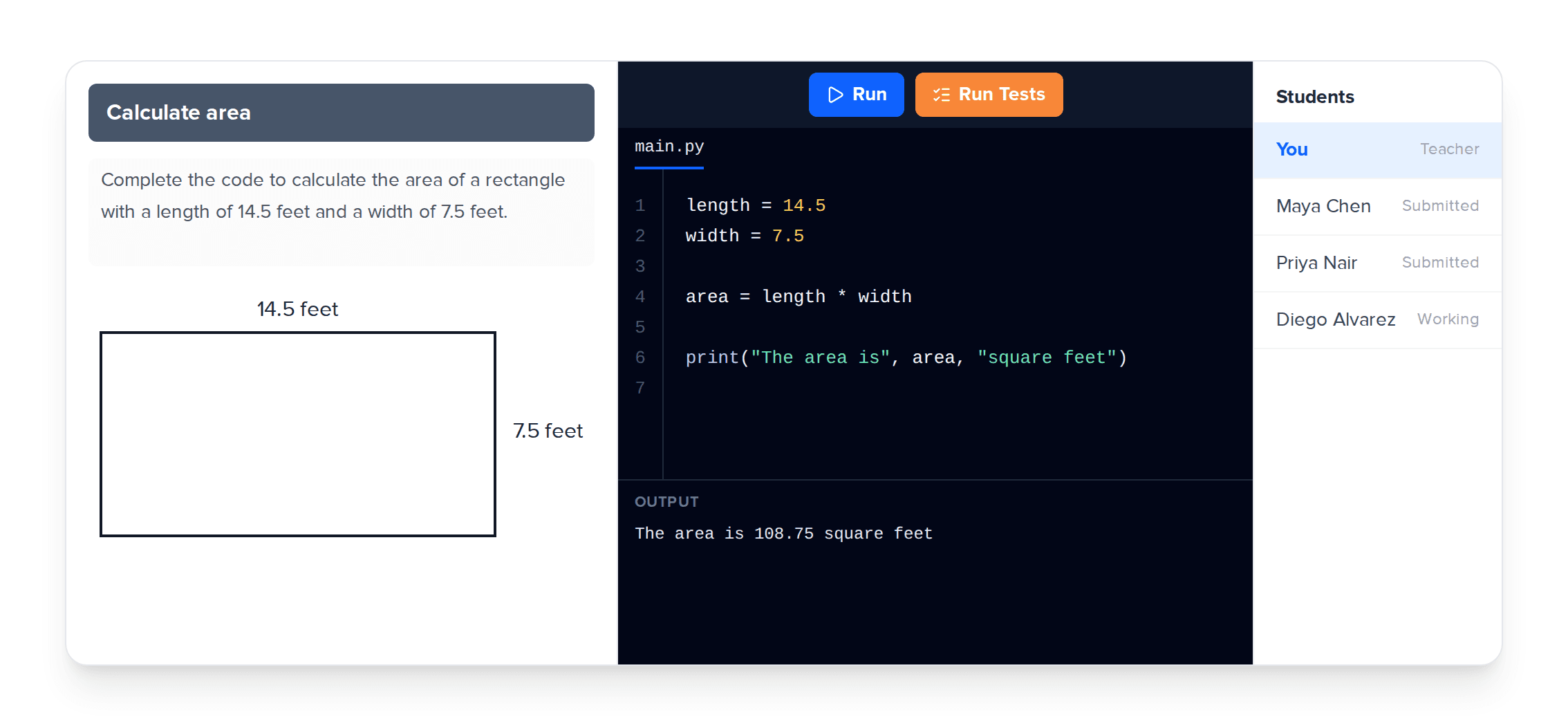
JuiceMind: Featuring a modern, intuitive interface designed with learners in mind, JuiceMind provides a distraction-free coding environment where students can focus on learning rather than navigating a complex interface. The platform incorporates gamification elements and visual feedback that particularly resonate with younger learners.
CodeHS: Offers a functional interface that prioritizes access to a wide range of resources. While comprehensive, some teachers report that younger students occasionally find the interface overwhelming due to the density of options and text-heavy presentation.
2. Curriculum and Content
JuiceMind:
- Specialized curriculum for Python, Java, JavaScript, and web development
- Deep integration with CSAwesome and other AP Computer Science curricula
- Interactive coding challenges designed around real-world applications
- Strong focus on project-based learning with scaffolded support
CodeHS:
- Broad curriculum covering multiple languages and CS concepts
- Video-based instruction with accompanying exercises
- Structured progression through concepts with incremental challenges
- Well-established AP CS A and AP CS Principles courses
3. Assessment and Feedback
JuiceMind:
- Automated testing with detailed, student-friendly error messages
- AI-assisted code review that provides personalized feedback
- Plagiarism detection with similarity visualization
- Comprehensive analytics dashboards for teachers to identify learning gaps
CodeHS:
- Autograder for objective assessments
- Teacher-facing tools for reviewing student work
- Progress tracking across curriculum modules
- Quiz and test functionality for knowledge assessment
Teacher Testimonials
JuiceMind Users
"After switching to JuiceMind from CodeHS, I've seen a 40% increase in assignment completion rates. The interface is more engaging for my middle school students, and the immediate feedback helps them correct mistakes without waiting for my input."
— Maria G., Middle School CS Teacher
"The analytics in JuiceMind transformed how I teach. I can quickly identify struggling students and concepts that need reinforcement, allowing me to be much more effective with my intervention strategies."
— James T., High School CS Teacher
Conclusion
Both JuiceMind and CodeHS offer valuable tools for computer science education, but they excel in different areas. JuiceMind stands out for its modern interface, detailed feedback systems, powerful analytics, and specialized curriculum alignments. CodeHS offers breadth of content, established resources, and a structured approach to CS education.
Many schools find that JuiceMind provides a more engaging, data-rich experience that leads to better outcomes, particularly for novice programmers and diverse student populations. However, the right choice ultimately depends on your specific classroom needs, student demographics, and instructional goals.
We recommend requesting demos of both platforms and involving your teaching team in the evaluation process. Many schools find that the investment in a platform that truly engages students and provides actionable data pays dividends in student learning outcomes and program growth.